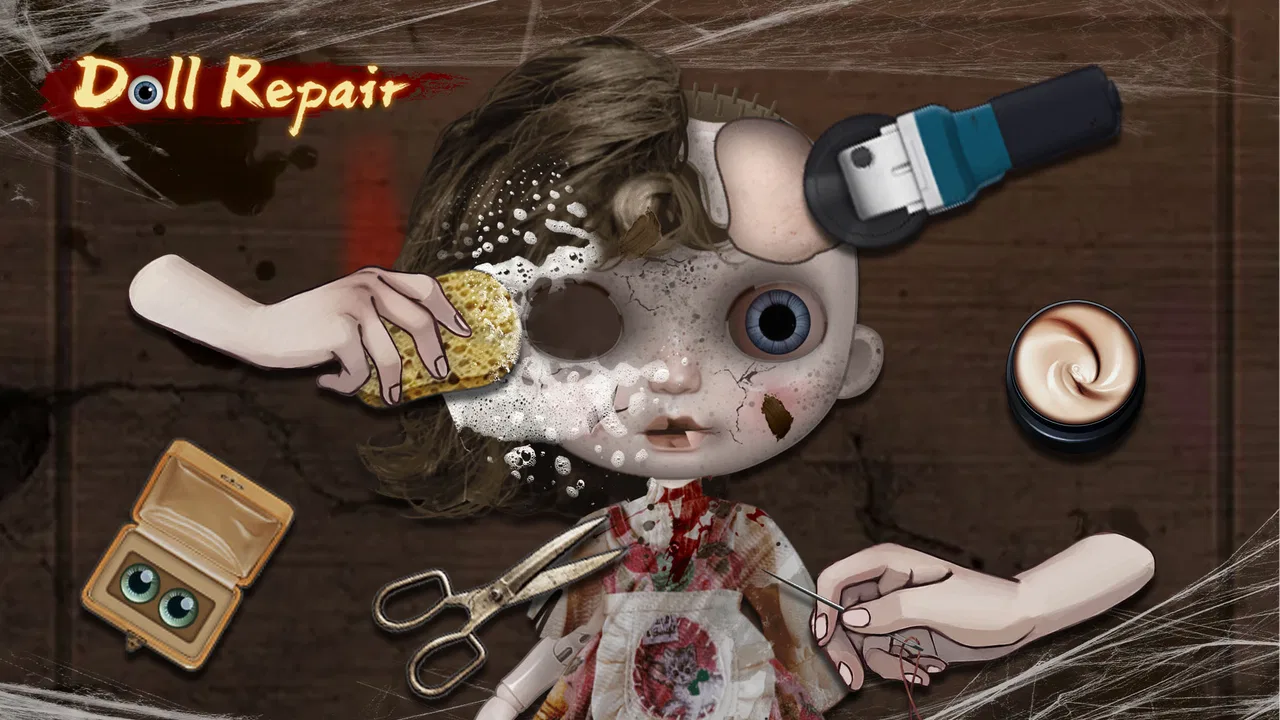
Doll Repair - Doll Maker
- 4.6
- Rating
- 10.00M
- Installs
- Free
- Price

 Analysis by App-foxy
I approached Doll Repair - Doll Maker expecting a small, relaxing dress-up game, but its central idea is a little more involved than simply choosing an outfit. The game combines doll repair with customization, so the satisfaction comes from taking a worn or incomplete-looking character and gradually making it presentable again. That repair-first focus gives the experience a simple goal in each session: look closely, decide what needs attention, and then use the available styling choices to finish the doll.
That makes it a comfortable fit for players who enjoy casual simulation games with visual results instead of complicated rules. I do not need to memorize systems or manage a large virtual world. I can open it for a short break, work through the current doll, and stop when the finished appearance feels right. It is free to download, suitable for Everyone, and developed by Gloryway Puzzle. Its average rating is 4.6 from around 40 thousand ratings, while its install count has passed 10 million, which suggests that the straightforward format has found a broad audience.
Repairing the doll is the feature that gives the dress-up loop purpose
The most important thing about this game is that dressing the doll is not presented as an isolated fashion menu. The repair element creates a before-and-after process. Instead of starting with a perfectly finished character and only changing colors or clothes, I get the feeling that I am helping restore the doll before giving it a final look. That small change in framing makes each stage feel more like a task than a collection of random cosmetic buttons.
You May Also Like

 Blood Strike: 2.5 Anniversary
Blood Strike’s Loadouts Turn Every Drop Into a Tactical Gamble
A close look at Blood Strike’s custom loadouts: how fast access to signature weapons reshapes its battle royale rhythm, rewards preparation, and narrows the gap between fights.

 Pandora - Music & Podcasts
Pandora’s Music Is Easy to Start, but Harder to Recover
Pandora’s strength is its low-effort path from a seed to a station. Its weak spot is how much confidence it asks you to place in connection, setup, and quiet recovery.

 8 Ball Pool
 Is Built on Rivalries, Rematches, and Routine
A close look at the rivalries, rematches, shared routines, and unanswered safety questions that turn a quick pool match into a persistent mobile community.

 Samsung Music
’s Quiet Strength Is Playing What You Already Own
Its reach comes less from spectacle than from dependable access to a personal library. That simplicity is both the app’s strongest retention engine and its ceiling.

 AccuWeather: Weather Radar
AccuWeather Review: A Quick, Clear Forecast for Everyday Decisions
For everyday plans, the best forecast is the one you can understand quickly. AccuWeather makes rain timing, radar, and local conditions easy to act on, with a few trade-offs.

 Hill Climb Racing
Why Hill Climb Racing Still Turns Crashes Into One More Run
A tiny car, a bumpy hill and one more upgrade: Hill Climb Racing keeps resurfacing because its simple chaos makes every near-miss feel personal.
More From Our News Desk



In practice, the appeal comes from the visible transformation. A doll can begin in a state that looks unfinished, and the player works toward a cleaner, more complete presentation. The game’s store summary describes the experience as making a paper doll and fixing it with dress-up, and that combination is important: the customization is not merely decoration at the end, but part of the reward for completing the repair-oriented activity.
I found this especially effective for younger players because the objective is easy to understand without a long explanation. There is no need to interpret a complicated story or learn a deep strategy system. The player sees a doll that needs attention, follows the available interaction, and watches the result improve. Adults who like gentle visual tasks may also enjoy it, although anyone looking for a demanding simulation will probably find the structure too light.
Why the repair angle matters more than ordinary dress-up
Many dress-up games are built around endless choice. That can be enjoyable, but it can also make the experience feel directionless: select an item, compare it with another, and move on. Here, the repair premise gives me a reason to engage with the doll before styling it. I am not only asking which outfit looks best; I am also responding to the condition of the character and the order in which the makeover should happen.
That order creates a useful habit. I tend to finish the practical-looking part first and leave the visual decisions for the end. This prevents me from spending too much time choosing a style before the doll is ready. For a child, it can quietly encourage attention to sequence and completion. For an adult, it makes the game feel more satisfying than a completely open-ended wardrobe screen.
The limitation is that the repair concept does not turn the game into a detailed restoration simulator. The experience remains casual and accessible. I would not choose it for realistic crafting, detailed material work, or a long-term management challenge. Its strength is the clear visual payoff, not technical depth.
How the experience feels during an ordinary play session
The basic rhythm is easy to settle into. I start by examining the doll and identifying the current task, then interact with the repair or makeover elements that are presented. Once the doll looks ready, I spend time on the dress-up side and judge the result as a complete appearance rather than as a single item choice. This makes the game suitable for short sessions because there is a natural stopping point when the doll feels finished.
What I like about this structure is the low mental load. I can play while taking a break from work or while waiting for an appointment without needing to remember a complicated objective from the previous session. The game’s category is simulation, but it uses that label in a very approachable way. It simulates the idea of fixing and presenting a doll rather than asking me to operate an elaborate workshop or economy.
The visual feedback is doing much of the work. The game depends on the player noticing improvement, so the difference between the starting state and the completed look needs to feel clear. That is also why the app works better when I approach it as a sequence of small transformations. Trying to rush through every interaction removes much of the charm, because the main pleasure is seeing the character become more complete.
A practical workflow that makes the game less repetitive
My most useful approach is to separate repair decisions from style decisions. I first concentrate on restoring the doll and avoid trying to settle on the final look immediately. After that, I compare the available clothing or appearance choices as a group. This simple two-step workflow keeps the session organized and makes the dress-up portion feel like a reward rather than another task competing for attention.
I also recommend looking at the whole doll before selecting anything. It is tempting to tap the first attractive option, especially when the game is designed for quick interaction, but pausing for a moment helps me choose a more coherent result. I pay attention to whether the final outfit matches the doll’s overall appearance instead of judging every item on its own. That is a small detail, but it makes the finished screen feel more intentional.
Another useful habit is to treat short sessions as complete sessions. There is no need to force a long play period from a game built around individual doll makeovers. I get more enjoyment when I finish one repair-and-style sequence and close the game, rather than continuing after the visual novelty has worn off. This is one of the reasons I see it as a good break-time title rather than a game I would play continuously for an entire evening.
The best everyday scenario for Doll Repair - Doll Maker
The strongest use case is a short, calm break for someone who wants a visible result without pressure. Imagine a child coming home from school and wanting something interactive but not competitive. They can open the game, work on a doll, and make choices based on appearance rather than worrying about losing against another player. The same situation works for an adult who wants a few quiet minutes between chores or during a commute, provided the phone is being used safely and the session is convenient.
I would also recommend it for parents looking for a simple game that a child can understand quickly. The Everyone content rating makes the intended audience broad, and the repair-and-dress-up concept is easier to explain than a game with complex objectives. Still, I would not treat the age rating as a substitute for normal supervision. A child may understand the gameplay immediately, but decisions around spending and device use are still better handled by an adult.
The game can work well as a creative prompt, too. After completing a doll, a player can think about why a particular combination looks balanced or how a different choice would change the character’s personality. That is not a formal design tool, and I would not use it as a replacement for drawing or a dedicated fashion editor. Its value is that it gives children and casual players a small, guided space to experiment with visual choices.
It is less suitable when I want a strong sense of progression across many hours. Someone who prefers competitive challenges, exploration, narrative missions, or deep resource planning will probably reach the limits of this format quickly. Compared with larger simulation games, this one is intentionally narrow: it focuses on the doll in front of me rather than building a world around it.
What it is like compared with other dress-up and simulation games
Compared with a conventional dress-up app, this game has a clearer starting problem. The doll needs to be repaired before the styling feels complete, so I am following a more directed loop. That is helpful when I want guidance, but it is less appealing if I prefer total freedom from the first screen. Open-ended dress-up alternatives usually give me more control over creating a look from scratch, while this game gives more structure to the makeover.
Compared with a deeper simulation game, the advantage is immediacy. I can understand the objective almost at once, and the result is visual rather than numerical. The trade-off is that there is less room for strategic planning or long-term development. I would choose this title for accessible interaction and quick completion, not for complex systems.
Compared with a purely decorative paper-doll activity, the repair focus adds a stronger sense of progression within each session. I am not only moving clothes around; I am completing a small transformation. That distinction is modest, but it is the reason the game has more staying power for me than a basic outfit selector.
Where the experience starts to show its limits
The biggest limitation is repetition. Once the repair-and-dress-up pattern becomes familiar, the enjoyment depends heavily on how much I like making visual choices. Players who need constant new mechanics may feel that the loop does not develop enough. I would describe it as a focused casual game, not a broad simulation with several layers of play.
There is also a difference between accessible interaction and meaningful challenge. The game is easy to pick up, which is a strength for its intended audience, but experienced players may want more difficult decisions. If I am searching for a game that tests timing, planning, or problem-solving under pressure, I would look elsewhere. The repair theme creates purpose, but it does not automatically create high difficulty.
Because the game is free, I also pay attention to the possibility of in-app purchases. Individual purchases range from $3.99 to $29.99, so I would be cautious about handing the device to a child without discussing spending first. The free entry point is useful for trying the core experience, but families should make sure purchase controls on the device match their expectations. This is not a criticism of the repair mechanic itself; it is a practical consideration for anyone sharing a phone or tablet.
The current version is 1.9101 and the game requires Android 6.0 or later. That makes it accessible on many older Android devices, although actual comfort will still depend on the phone’s screen size and performance. On a small display, careful visual comparison may feel less comfortable than on a larger one. I would use a device with enough screen space for a child to see the doll clearly and make selections without accidental taps.
Another trade-off is that the game’s simplicity can be both welcoming and limiting. I appreciate not being buried in menus, but I also cannot expect the same depth as a full creative suite. If my goal is to design detailed characters, save extensive collections, or build elaborate scenes, a dedicated creation app would be a better match. This title works when I want a guided makeover, not an unlimited design workspace.
Who gets the most from this focused makeover loop
The best audience is made up of casual players who enjoy clear tasks, visual changes, and gentle simulation. Children can understand the basic idea quickly, while adults may appreciate the short-session format. It is also a reasonable choice for someone who likes dress-up games but wants a little more direction than a blank wardrobe screen provides.
I think it is particularly good for players who enjoy completing small projects. Repairing the doll, making styling decisions, and reaching a finished appearance creates a compact sense of accomplishment. The game does not need a complicated reward system to provide that feeling; the completed character is the reward. That is a useful distinction for anyone who prefers calm progress over competition.
I would skip it if I need a serious simulation, a story-driven adventure, or a game that keeps introducing demanding new mechanics. I would also look for another option if unrestricted customization is my priority. The repair premise guides the experience, and that guidance will feel helpful to some players but restrictive to others.
For parents, the practical questions are straightforward. The game is free to start, carries an Everyone rating, and includes optional purchases, so it can be tested without an upfront payment while still deserving sensible spending limits. For Android users, compatibility begins with version 6.0 or later. Those details make it easy to decide whether the device and household rules are suitable before a child spends much time with it.
For me, Doll Repair - Doll Maker succeeds because it gives dress-up a small but effective purpose. The repair step changes the mood from “pick anything you like” to “finish this doll carefully,” and that makes the final appearance more satisfying. It is not a deep or demanding simulation, and its repeated structure will not suit everyone. But for a relaxed, family-friendly makeover game with a clear beginning and end to each session, I find the focused repair-and-style loop easy to recommend.
My final advice is to try it when you want a short creative task rather than a long gaming commitment. Take a moment to inspect the doll, complete the repair before styling, and judge the final look as a whole. If that simple transformation feels rewarding, the game has enough charm to become a pleasant break-time favorite. If you are searching for complexity, competition, or unlimited design control, its narrow focus will be the clearest reason to choose something else.
FAQs for Doll Repair - Doll Maker
01What is Doll Repair - Doll Maker and what can I do with it?
Doll Repair - Doll Maker is an engaging app where users can repair, customize, and design dolls. Players can clean, fix, and dress up dolls, using various tools and accessories provided within the app. It’s perfect for those who enjoy creative and hands-on activities, offering a therapeutic and imaginative experience.
02Is Doll Repair - Doll Maker free to download and play?
Doll Repair - Doll Maker is free to download and play, offering a variety of features at no cost. However, the app includes optional in-app purchases. These purchases can enhance the gameplay by unlocking additional tools, outfits, and accessories, providing a richer experience for those who choose to invest.
03What age group is Doll Repair - Doll Maker appropriate for?
Doll Repair - Doll Maker is designed for players of all ages, particularly appealing to children and pre-teens who enjoy creative play. The user-friendly interface and vibrant graphics make it accessible for younger audiences, though it can also entertain older users who appreciate customization and design games.
04Does Doll Repair - Doll Maker require an internet connection?
Doll Repair - Doll Maker does not require a constant internet connection for basic gameplay, making it convenient for on-the-go entertainment. However, an internet connection is necessary for accessing certain features, such as downloading updates, purchasing in-app content, or engaging in community sharing options.
05Are there any safety features included in Doll Repair - Doll Maker?
Yes, Doll Repair - Doll Maker includes several safety features to ensure a secure experience for users. The app offers parental controls to manage in-app purchases and restrict access to certain content. Additionally, it provides a safe community environment for sharing creations, with moderation to prevent inappropriate content.
Pros
- User-friendly interface for all ages.
- Wide variety of doll customization options.
- Frequent updates with new features.
- Offline mode available for uninterrupted play.
- Interactive tutorials for beginners.
Cons
- Limited free features without in-app purchases.
- Occasional ads can disrupt gameplay.
- Requires a stable internet for some features.
- Some customization options are locked early.
- Graphics may be basic on older devices.

Doll Repair - Doll Maker
Gallery